
Account Security and Settings for Safer Crownz Access
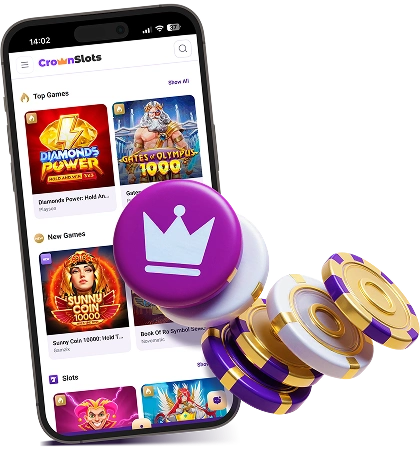

Account security deserves attention before any online gambling account is used, particularly when a platform’s authorisation for a particular market is not established. The available information describes crownz casino uk as an informational route for UK readers, but it does not prove British authorisation or guarantee access. A careful approach therefore begins with checking jurisdictional status, understanding verification demands and protecting personal and payment details before considering any account activity.
Check the UK position before sharing personal details
The first security decision is not which game to choose; it is whether the service is appropriate for your location. Available UK-facing material reports that the operator does not hold a UK Gambling Commission licence and is not authorised to offer gambling services to consumers in Great Britain. The terms’ restricted-country list does not name the UK, but that omission is not evidence of permission. References to pounds or a UK-facing page do not establish authorisation either.
This distinction matters because verification involves sensitive information. A platform may ask for identity documents, proof of residence and financial or payment records. Before uploading anything, read the current terms, privacy information, restricted-country wording and verification policy on the operator’s own website. Check whether the stated requirements apply to Great Britain or to another jurisdiction, and do not assume that a general international service has the same protections or obligations as a UK-licensed operator.
Do not attempt to overcome a location restriction with a VPN. The published terms prohibit VPN use, and disguising your location can create further account and compliance problems. If the legal or regulatory position remains unclear, pause rather than sending documents or depositing funds. A cautious reader should also retain screenshots or downloaded copies of relevant terms, because web pages and promotional wording can change after an account is opened.
Prepare verification documents without weakening privacy
Verification is commonly used to confirm that an account belongs to the named individual and that funds come from an acceptable source. The available information says that identity, residence and financial or payment documents may be requested, including financial statements. It also says that incomplete checks can result in restrictions or closure. Treat any request as important, but confirm it through the official account or support route rather than relying on an unexpected message.
Before submitting a document, inspect the address bar carefully and avoid public Wi-Fi where possible. The website should use a secure connection, but the padlock alone does not prove that a page is genuine. Never email identity documents to an unverified address or send them through a social-media message. If a request seems excessive, ask support why it is needed, how it will be stored and whether a specific alternative is available under the stated policy.
Good preparation reduces mistakes and unnecessary exposure. Make sure your name, date of birth and address match the information held on the account, and check that images are readable without revealing unrelated documents in the background. Keep copies in a protected location, but do not retain scans in an open photo folder or shared cloud account. The National Cyber Security Centre’s online security guidance offers broader advice on passwords, phishing and protecting accounts.

Build login habits that resist account takeover
Use a unique password for the gambling account rather than reusing one from email, banking or shopping. A long passphrase made from several unrelated words can be easier to manage than a short complex password, provided it has not been used elsewhere. Store it in a reputable password manager if that suits you, and keep the manager protected with a strong master password and available security updates.
Registration information should be accurate, but it should not be more extensive than the service requires. The available material says that registration may request login credentials, contact details, country and preferred currency. Do not create multiple accounts, share access or let another person use your credentials: the stated terms allow one account per person and prohibit account sharing. These practices can complicate verification and make it harder to prove who authorised a transaction.
Watch for signs of phishing after registration. A message that creates urgency, asks for a password or requests a payment to release a withdrawal should be treated with suspicion. Open the website by typing its known address or using a trusted bookmark instead of following an unsolicited link. Never disclose a one-time code, password or full payment details to a person claiming to be support. If available security settings include extra login protection, enable them and review account notifications regularly.
Keep payment ownership aligned with your identity
Payment security and identity checks are connected. The available terms require deposits to come from a payment method registered in the player’s own name, and third-party deposits may be reversed. Using a friend’s card, a shared wallet or another person’s account can therefore create both fraud concerns and withdrawal delays. Use only a method you control and keep confirmation records for deposits, including dates, amounts and transaction references.
Do not judge a payment option solely by a displayed pound value. The terms state that gameplay is available in euros, while other pages show pound equivalents for selected transactions. Currency treatment, fees and available methods may depend on location and the cashier presented after login. Before confirming a transaction, check the amount, currency, conversion charge, minimum, maximum and whether the method can also receive withdrawals.
Verification may be requested before a withdrawal is approved, and the operator’s published material says that account details or payment ownership can delay processing. That makes it sensible to complete any requested checks before committing money, where the service is lawful and suitable for you. Save receipts and do not repeatedly retry a failed transaction, as duplicate attempts can create confusion. If an unfamiliar payment appears, contact the payment provider promptly and secure the account.
Plan recovery and account controls before they matter
Recovery should be tested conceptually before a problem occurs. The available FAQ says that a forgotten password can be addressed through “Need Help?” and “Forgot Password” on the login page, followed by instructions sent to the registered email address. Protect that email account as carefully as the casino login, because access to it may enable a password reset. Check junk folders for missing verification messages, but do not trust attachments or unusual reset links.
If login, verification or deposit problems continue, the published support route is 24/7 Live Chat. Contact support through the website rather than a number or social account supplied in an unsolicited message. Keep the conversation factual and avoid sending a full password, card security code or one-time authentication code. Ask for a case reference and record the date, the issue and any documents requested, while removing unnecessary personal information from screenshots.
Account controls are part of security, not merely budgeting tools. The available information describes daily, weekly and monthly deposit, loss and wager limits, plus cooling-off and self-exclusion. Decreases apply immediately, while increases may require confirmation and can be delayed until an existing limit expires. Cooling-off blocks deposits and promotions, whereas self-exclusion disables the account and blocks deposits and withdrawals for the selected period. Choose controls before pressure or concern makes clear thinking harder.
Account-security questions readers often ask
Does a UK-facing page prove UK authorisation?
No. A UK-facing page, pound references or a restricted-country list that omits the UK do not establish authorisation in Great Britain. Check the current regulatory position independently and read the operator’s terms before sharing documents or funds. If the position is unclear, do not proceed until you have reliable confirmation.
What should I do if verification is requested?
Use only the official account area or verified support channel, confirm why the document is needed, and check that your account details are accurate. Submit clear copies through a secure upload route, not an unsolicited email or message. Keep records, and never disclose passwords or one-time security codes.
Can I use another person’s card or account?
The available terms require payment methods to be in the account holder’s own name and warn that third-party deposits may be reversed. Using another person’s method can trigger checks, delays or restrictions. Use only a payment method you control, and retain transaction confirmations in case ownership must later be demonstrated.
Related posts